
If you’re a carpenter, builder or tradesperson regularly carrying timber sheets and building materials, securing your load properly isn’t optional – it’s essential.
In this How-To guide, we walk through the recommended method for securing timber using ratchet straps on a Wedgetail Trade platform, ensuring your load stays stable, secure and safe on the road.
The Right Setup Matters
For this demonstration, we’re using a Wedgetail Trade platform fitted with our crossbar-mounted ratchet straps.
This setup includes:
- A separate strap (approximately 2 metres long)
- A stainless steel ratchet assembly mounted to the platform
- An eyelet on the opposite side of the rack
The stainless ratchet assembly is designed to remain mounted to the platform and withstand exposure to the elements, though it can be removed if required.
This system keeps everything organised and ready to use whenever you need to secure a load.
Step-by-Step: How to Secure Timber Sheets
1. Position the Load
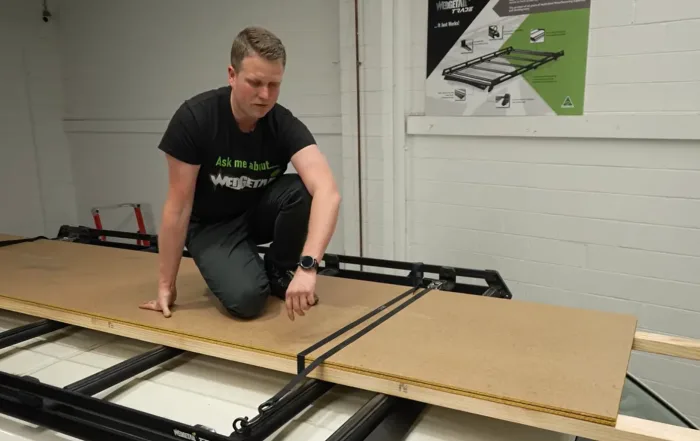
Place your timber sheets or building materials evenly across the platform, ensuring weight is distributed correctly and supported by the rack structure.
2. Use a Choke Hold for Better Security
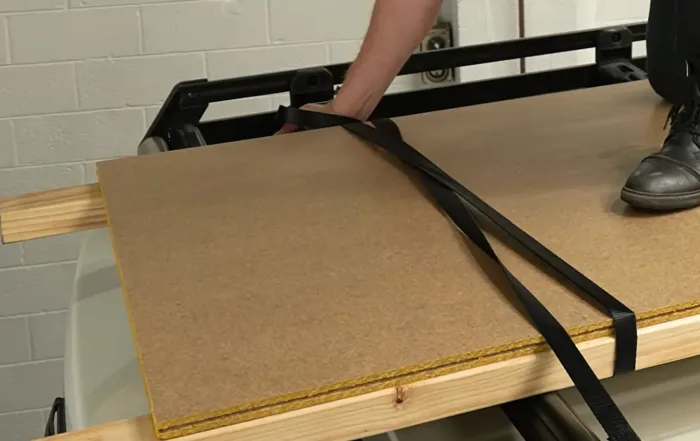
Instead of simply throwing a strap over the load, we recommend using a choke hold method.
Here’s how:
- Pass the strap over the top of the timber
- Bring it back underneath the platform rail
- Loop it back over itself to create a choke
This method helps prevent shifting and keeps the strap firmly positioned during transit.
3. Feed the Strap Through the Ratchet
Once the strap is positioned:
- Pass it through the ratchet mechanism
- Feed it out the back side of the ratchet (this makes tightening easier)
- Pull the slack through before ratcheting
Then tighten the ratchet until the load is firmly secured.
You’re aiming for tight and stable – not over-tensioned to the point of damaging materials.
4. Secure the Excess Strap
Loose strap ends can flap in the wind, create noise and wear down over time – so finishing properly is important.
A simple and effective method:
- Fold the excess strap over your hand
- Create an open roll
- Pass a loop through the loop
- Pull it tight
- Tuck it neatly underneath the strap line
When wind flows over the roof rack, the excess strap stays contained and doesn’t flap around.
4. Secure the Excess Strap
Loose strap ends can flap in the wind, create noise and wear down over time – so finishing properly is important.
A simple and effective method:
- Fold the excess strap over your hand
- Create an open roll
- Pass a loop through the loop
- Pull it tight
- Tuck it neatly underneath the strap line
When wind flows over the roof rack, the excess strap stays contained and doesn’t flap around.
Built for Trade Use
The Wedgetail Trade platform is designed for real-world jobsite demands. Combined with crossbar-mounted ratchet straps, it provides a reliable and repeatable way to secure timber, sheets and other bulky materials.
Taking a few extra moments to strap your load correctly not only protects your materials – it protects other road users and your vehicle.
If you regularly carry timber, upgrading to a mounted ratchet system on your Wedgetail platform is a simple way to improve safety, efficiency and peace of mind on every trip.
SHARE THIS STORY
RECENT NEWS

Wedgetail at the National 4×4 Outdoors Show 2026
Australia's biggest 4x4 show is coming to Melbourne — and Wedgetail will be there. We're exhibiting at the National 4x4 Outdoors Show from 21–23 August 2026 at the Melbourne Showgrounds. Come and find us [...]
How To: Reduce Wind Humming Using the Strap Slap Method
If you've ever tied flat materials to your roof rack and hit the highway, you'll know the sound - a loud, droning hum or whistle that vibrates through the whole vehicle. It's one of [...]
How To: Load with Overhanging Materials Safely
Sooner or later you'll need to carry something longer than your rack - timber, extrusions, sheets. Overhanging is fine when it's done right, but a long load catches wind and puts serious strain on [...]